Shifting Paradigms menu
  • EN
  • RU
  • Home
  • About
  • Partners
  • Team
  • Projects

topics

  • Blog posts and articles
  • Circular economy
  • Circular economy quick scans and tools
  • Climate finance and due diligence
  • Climate policy
  • Deep awareness and engagement
  • Metabolic analysis of flows and stocks
  • Rebound effect and sufficiency
  • Renewable energy and energy efficiency
  • Sector research and policy support

sectors

  • Agriculture and forestry
  • Construction
  • Energy and power
  • Finance
  • Households and SMEs
  • Industry
  • Mining and quarrying
  • Textiles
  • Transport
  • Waste
  • Water

Climate policy

Incentivising low-carbon and circular development is about incentivising what you want more off, and taxing what you want to see less. Putting a price on greenhouse gas emissions and encouraging their mitigation is one way to gradually move towards higher taxes on resource extraction and use, and lower taxes on labour.


Advancing climate policy development with Uganda, Zambia, Tanzania and DRC In a broader consortium Shifting Paradigms provided trainings on impact measurement and... read more
Climate finance and fossil fuel subsidies Globally, countries spent USD 523 billion on fossil fuel consumption subsidies in... read more
Exploring opportunities to expand the World Bank Pilot Auction Facility The Pilot Auction facility (PAF) is an innovative model that seeks to... read more
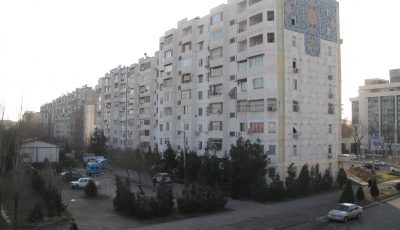
Integrated approach to mitigation and adaptation to climate change in Central Asia Uzbekistan inherited an inefficient district heating system and poorly insulated building stock... read more
Trainings on carbon accounting under the Nairobi Framework The Nairobi Framework is a cooperation between international organisations to build capacity in... read more
Will Kazakhstan be the next country to establish a carbon emissions trading scheme? Kazakhstan is among the few countries without access to international compliance carbon... read more
Climate policies for the Peruvian waste sector and Vietnamese cement industry The cement sector is responsible for about 5% of global CO2 emissions... read more
Design support to emissions trading in Kazakhstan The Ministry of Environmental Protection of the Republic of Kazakhstan (MoEP) is... read more
Design options for sectoral market mechanisms and their implications for the EU ETS The European Commission initiated an in-depth study to identify, assess and elaborate... read more
Towards an energizing partnership – China’s role as catalyst of renewable energy development in Africa On 8 November 2009, at the fourth Forum on China–Africa Cooperation (FOCAC)... read more
Option Review for Kazakhstan to Participate in the International Carbon Market Kazakhstan was a party to both the Climate Convention and the Kyoto... read more
Trainings on compliance strategies under the Emission Trading Scheme in Kazakhstan Kazakhstan launched an Emission Trading Scheme to establish a national price on... read more
Lectures on the Kyoto Protocol at Universities in Kazakhstan (in Russian) KIMEP and Satpayev University gave me the opportunity for a lecture on the Kyoto... read more
Using domestic offset schemes to incentivise deep cuts in emissions in Denmark and Finland The prevailing legal conception of offset mechanisms under the Kyoto Protocol was an arguably... read more
Green Investment Scheme for Ukraine A Green Investment Scheme is an investment fund based on the value... read more

Posts navigation

Newer Projects

shifting paradigms

It's time to turn

contact

Jelmer Hoogzaad
jelmer@shiftingparadigms.nl
+31(0)6 41 47 01 91

topics

  • Blog posts and articles
  • Circular economy
  • Circular economy quick scans and tools
  • Climate finance and due diligence
  • Climate policy
  • Deep awareness and engagement
  • Metabolic analysis of flows and stocks
  • Rebound effect and sufficiency
  • Renewable energy and energy efficiency
  • Sector research and policy support

sectors

  • Agriculture and forestry
  • Construction
  • Energy and power
  • Finance
  • Households and SMEs
  • Industry
  • Mining and quarrying
  • Textiles
  • Transport
  • Waste
  • Water

follow me